
Is Your Business Ready for AI Search? Google, Kimi K3 & The New Search Era
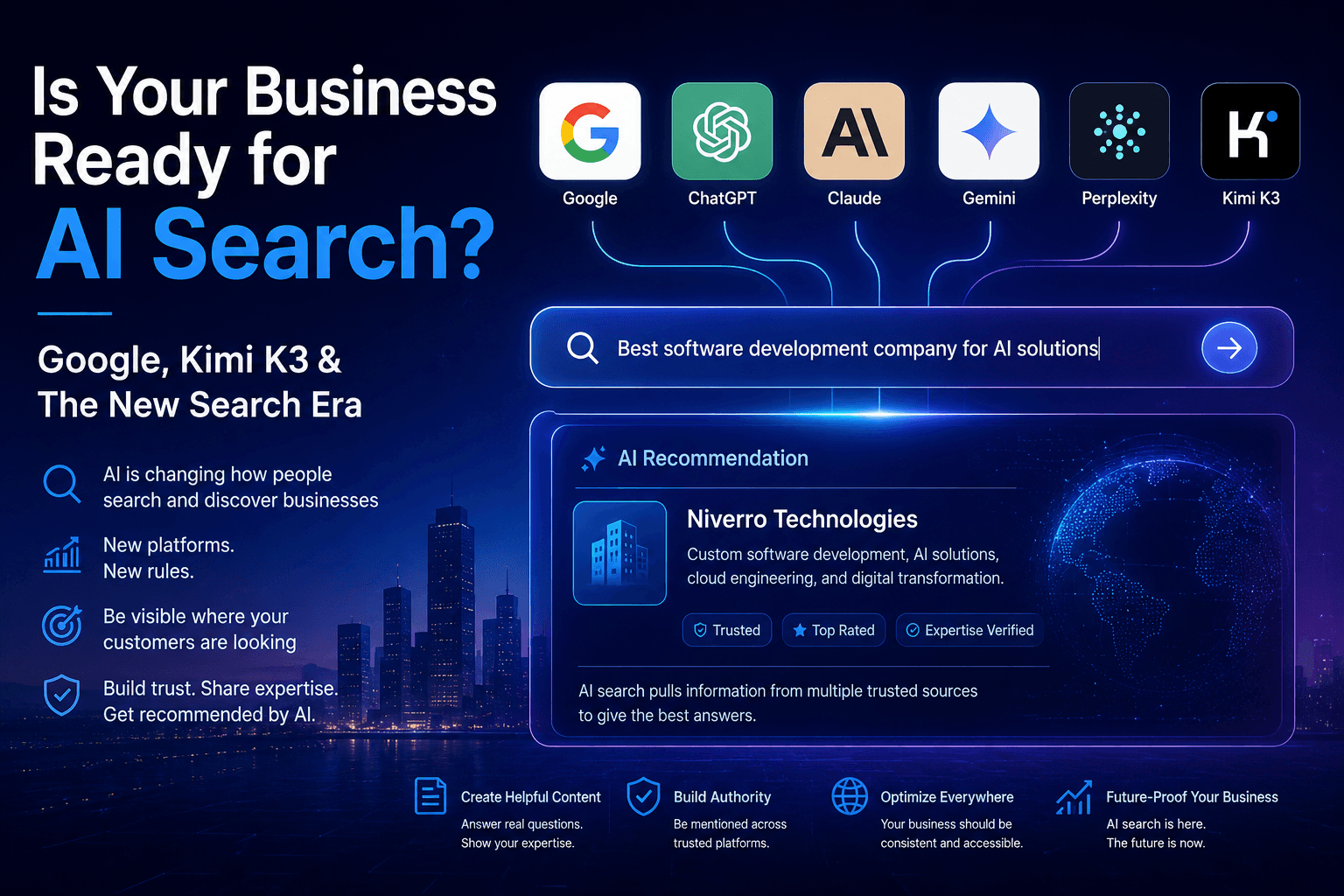
Traditional SEO is no longer enough. AI-powered search is changing how customers discover businesses, and companies that adapt early will have a significant advantage.
Search Is Changing Faster Than Most Businesses Realize
For over two decades, businesses have optimized websites to rank on Google using keywords, backlinks, and technical SEO.
That strategy still matters.
But a much bigger shift is already happening.
Today, people don't just search on Google. They ask ChatGPT, Claude, Gemini, Perplexity, Kimi K3, Grok, and other AI assistants questions like:
- "Who builds custom ERP software in India?"
- "Recommend a healthcare software development company."
- "What's the best way to automate customer support?"
- "Who can build an AI chatbot for my business?"
Instead of showing ten blue links, these platforms generate direct answers.
If your company isn't part of those answers, you're invisible to an entire generation of buyers.
Welcome to the AI Search Era
Modern AI systems don't simply rank websites.
They read documentation.
They understand context.
They compare sources.
They evaluate credibility.
They summarize information from multiple places before recommending businesses.
This means your digital presence is no longer judged only by search engines.
It is judged by AI.
Why Traditional SEO Alone Isn't Enough
Many businesses still believe SEO means:
- Adding keywords
- Writing occasional blogs
- Building backlinks
- Improving page speed
Those remain important, but AI search evaluates much more.
It looks for:
- Clear expertise
- Helpful content
- Consistent branding
- Structured information
- Trustworthy references
- Real business authority
The companies that educate their audience consistently are the ones AI systems are most likely to reference.
Where Your Customers Are Searching Today
Business buyers now research companies across multiple platforms.
Instead of relying on one search engine, they combine information from:
- Google Search
- ChatGPT
- Claude
- Gemini
- Perplexity
- Kimi K3
- Microsoft Copilot
- Medium
- GitHub
- YouTube
Your business needs to appear consistently across this ecosystem—not just on Google's first page.
How Businesses Can Prepare
1. Publish Helpful Content Regularly
Answer the questions your customers actually ask.
Instead of writing promotional articles, publish practical guides, industry insights, comparisons, and case studies.
The more useful your content is, the more likely AI systems are to reference it.
2. Build Authority Beyond Your Website
Your website is only one signal.
AI models also learn from trusted public sources.
Publish on platforms like:
- Medium
- LinkedIn Articles
- GitHub
- Industry blogs
- Business directories
Each quality mention strengthens your digital authority.
3. Keep Your Information Consistent
Your company name, services, contact information, and positioning should be identical everywhere.
Inconsistent information reduces trust for both search engines and AI systems.
4. Focus on Real Expertise
Generic AI-generated articles rarely perform well over time.
Publish content based on real experience:
- Projects you've completed
- Problems you've solved
- Lessons you've learned
- Industry trends you've observed
Original insights are becoming one of the strongest ranking signals.
5. Optimize Technical Foundations
AI search still depends on a technically healthy website.
Make sure you have:
- Fast loading pages
- Mobile-friendly design
- HTTPS security
- Structured metadata
- Clean navigation
- Accessible content
Good technical SEO remains essential.
AI Search Rewards Expertise
Imagine two software companies.
Company A publishes one sales page.
Company B publishes:
- Architecture guides
- AI implementation articles
- Cloud migration checklists
- Case studies
- Performance optimization tips
- Industry analysis
Which company would an AI assistant trust when recommending a software partner?
The answer is obvious.
Authority is earned through consistent expertise.
What This Means for Software Companies
For software development firms, AI search creates a major opportunity.
Potential clients increasingly ask AI assistants questions like:
- "Who can build my SaaS platform?"
- "Which company develops AI applications?"
- "Who offers cloud migration services?"
- "Can someone build a custom CRM?"
Companies producing valuable educational content today are positioning themselves to become tomorrow's recommended experts.
The Opportunity Is Just Beginning
Search is no longer limited to Google.
Customers are asking AI before they contact vendors.
They're comparing recommendations generated by multiple AI platforms.
Businesses that invest in content, credibility, and technical excellence today will have a significant competitive advantage over those that wait.
The future of search isn't about chasing algorithms.
It's about becoming the most trustworthy source of information in your industry.
Final Thoughts
AI search isn't replacing SEO—it is expanding it.
Businesses that combine technical SEO, authoritative content, strong branding, and real expertise will be far more visible in the years ahead.
At Niverro Technologies, we help businesses build scalable digital platforms, AI-powered applications, cloud solutions, and modern software systems designed for the future.
The next generation of customers won't just search.
They'll ask AI.
The real question is:
Will AI recommend your business?
Keep reading

The EU AI Act's August 2 Deadline Is Here: Is Your AI Software Actually Compliant?
The EU AI Act is reshaping how businesses build and deploy AI. Learn who it affects, the biggest compliance gaps, and the engineering steps every company should take before regulations tighten.
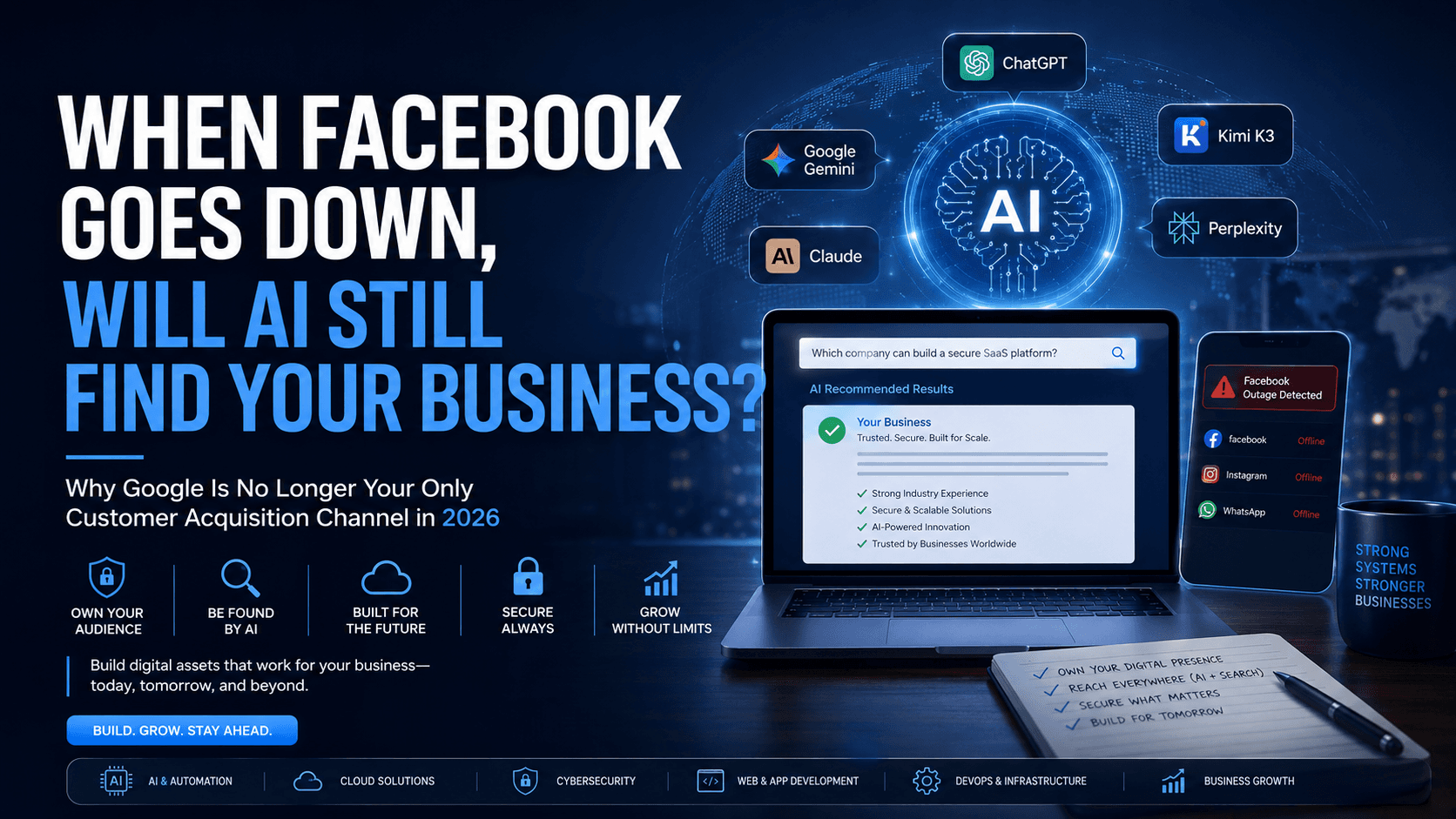
When Facebook Goes Down, Will AI Still Find Your Business?
Social media outages are a reminder that businesses don't own their audience. Learn why AI search, modern websites, cloud infrastructure, and cybersecurity are becoming the new foundation for customer acquisition in 2026.