
Is Your Website Ready for Peak Traffic? Lessons Every Business Can Learn from Global Events
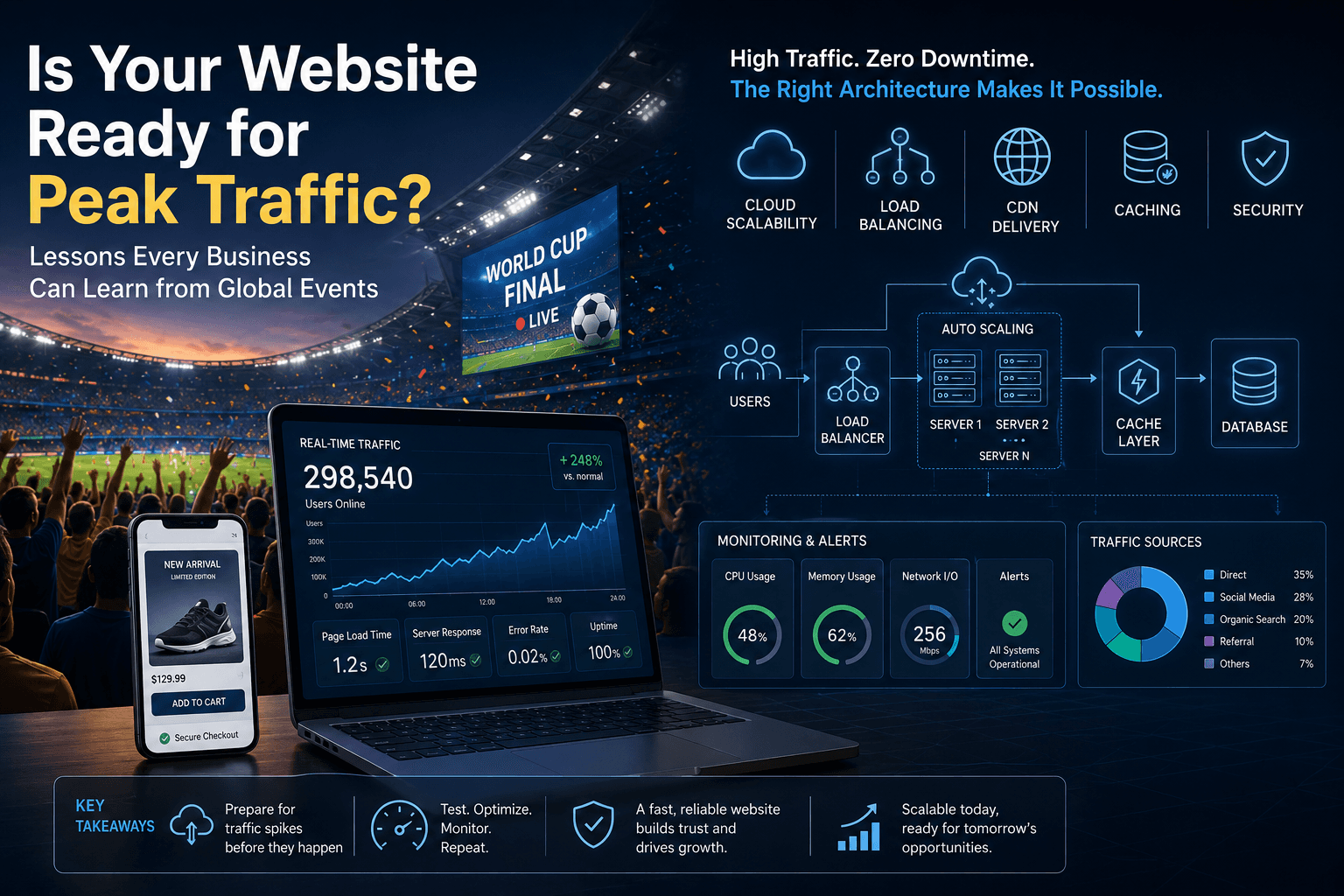
Every year, the internet experiences moments when millions of people rush online at the same time.
It could be the FIFA World Cup Final, Apple's annual product launch, Amazon Prime Day, Black Friday, a major concert ticket sale, or a viral product release. Within minutes, websites receive traffic that can be hundreds of times higher than normal.
While global companies invest heavily in preparing for these traffic spikes, many businesses only discover their website's limits after it crashes.
The question isn't whether your business will ever experience a surge in visitors.
The question is:
Will your website still perform when it matters most?
Why Peak Traffic Matters
Imagine launching a new product after months of planning.
Your marketing campaign is successful.
Social media is buzzing.
Customers start clicking your website.
Then...
Pages take 10 seconds to load.
The checkout stops responding.
Users abandon the site.
Support phones begin ringing.
Orders fail.
Instead of celebrating your launch, your team is trying to recover from downtime.
This happens more often than businesses realize.
Global Events Show What Scalability Really Means
Events like the FIFA World Cup demonstrate how modern digital infrastructure must handle unpredictable demand.
Millions of fans simultaneously:
- Watch live scores
- Purchase merchandise
- Book travel
- Stream matches
- Read news
- Share updates
- Use mobile apps
Behind every successful platform is an infrastructure designed to scale automatically without interrupting the user experience.
While most businesses don't need to support millions of users, the same engineering principles apply whether you're serving hundreds or hundreds of thousands of customers.
Signs Your Website Isn't Ready
Many websites appear fast during normal business hours but struggle under heavier traffic.
Warning signs include:
- Slow page loading
- Frequent server errors
- Database timeouts
- Failed payments
- Login issues
- High bounce rates
- Poor mobile performance
- Downtime during promotions
Even a few seconds of delay can reduce conversions and frustrate potential customers.
The Technology Behind High-Traffic Websites
Scalable platforms don't rely on a single powerful server.
Instead, they combine multiple technologies that work together.
Cloud Infrastructure
Modern cloud platforms allow applications to expand computing resources automatically when traffic increases.
Instead of purchasing expensive hardware that sits idle most of the year, businesses can scale resources only when needed.
Load Balancing
Rather than sending every visitor to one server, load balancers distribute requests across multiple servers.
This improves performance and prevents individual servers from becoming overloaded.
Content Delivery Networks (CDNs)
A CDN stores copies of your website closer to users around the world.
Visitors receive images, scripts, and other static content from the nearest location, reducing loading times and improving reliability.
Caching
Not every request should require a database query.
Caching technologies temporarily store frequently requested data, allowing pages to load significantly faster while reducing server load.
Database Optimization
As traffic grows, poorly optimized databases quickly become bottlenecks.
Proper indexing, query optimization, connection pooling, and database scaling ensure applications continue performing efficiently.
Monitoring and Observability
You can't fix what you can't see.
Modern monitoring tools continuously track:
- Server performance
- Response times
- Error rates
- CPU and memory usage
- Database performance
- Network activity
This allows technical teams to detect and resolve problems before customers notice them.
Load Testing Before It Matters
One of the biggest mistakes businesses make is waiting for real customers to test their infrastructure.
Professional load testing simulates thousands of users accessing your website simultaneously.
It helps answer critical questions:
- How many users can the website support?
- Which pages become slow first?
- Where are the infrastructure bottlenecks?
- Will payments continue working?
- Does the application recover automatically?
Finding these answers before launch is far less expensive than discovering them during a live campaign.
Peak Traffic Isn't Limited to Global Brands
Many small and medium-sized businesses experience unexpected traffic spikes.
Examples include:
- E-commerce sales
- Festival promotions
- New product launches
- Digital marketing campaigns
- Investor announcements
- Viral social media posts
- Educational admission periods
- Healthcare appointment bookings
Every growing business eventually reaches a point where performance becomes a competitive advantage.
Performance Is Customer Experience
Customers rarely know why a website is slow.
They simply leave.
Research consistently shows that even small delays in page loading can reduce engagement, lower conversions, and increase cart abandonment.
A fast, reliable website builds trust.
A slow website sends customers elsewhere.
Future-Proofing Your Business
Scalability isn't just about surviving today's traffic.
It's about preparing for tomorrow's growth.
Businesses investing in modern cloud architecture today gain the flexibility to launch new products, expand into new markets, and support larger customer bases without rebuilding their infrastructure from scratch.
Technology should enable growth—not limit it.
How Niverro Technologies Helps Businesses Scale
At Niverro Technologies, we design and build cloud-native applications that are engineered for performance, reliability, and growth.
Our expertise includes:
- Cloud Architecture
- AWS & Multi-Cloud Solutions
- DevOps & CI/CD Pipelines
- Load Testing & Performance Optimization
- Kubernetes & Containerization
- Database Optimization
- API Development
- Scalable Web Applications
- Infrastructure Monitoring
- Disaster Recovery Planning
Whether you're preparing for a product launch, expecting increased customer demand, or planning the next stage of your business, we help ensure your technology is ready before traffic arrives.
Final Thoughts
Global events remind us that demand can change in an instant.
The businesses that succeed aren't always the ones with the biggest marketing budgets—they're the ones whose technology continues performing when everyone else is struggling.
Your next traffic spike might come from a successful campaign, a viral social media post, or an exciting new product launch.
When that moment arrives, your website should be ready.
Because every second of downtime is a missed opportunity, and every fast, seamless experience is another reason for customers to choose your business.
Keep reading

The EU AI Act's August 2 Deadline Is Here: Is Your AI Software Actually Compliant?
The EU AI Act is reshaping how businesses build and deploy AI. Learn who it affects, the biggest compliance gaps, and the engineering steps every company should take before regulations tighten.
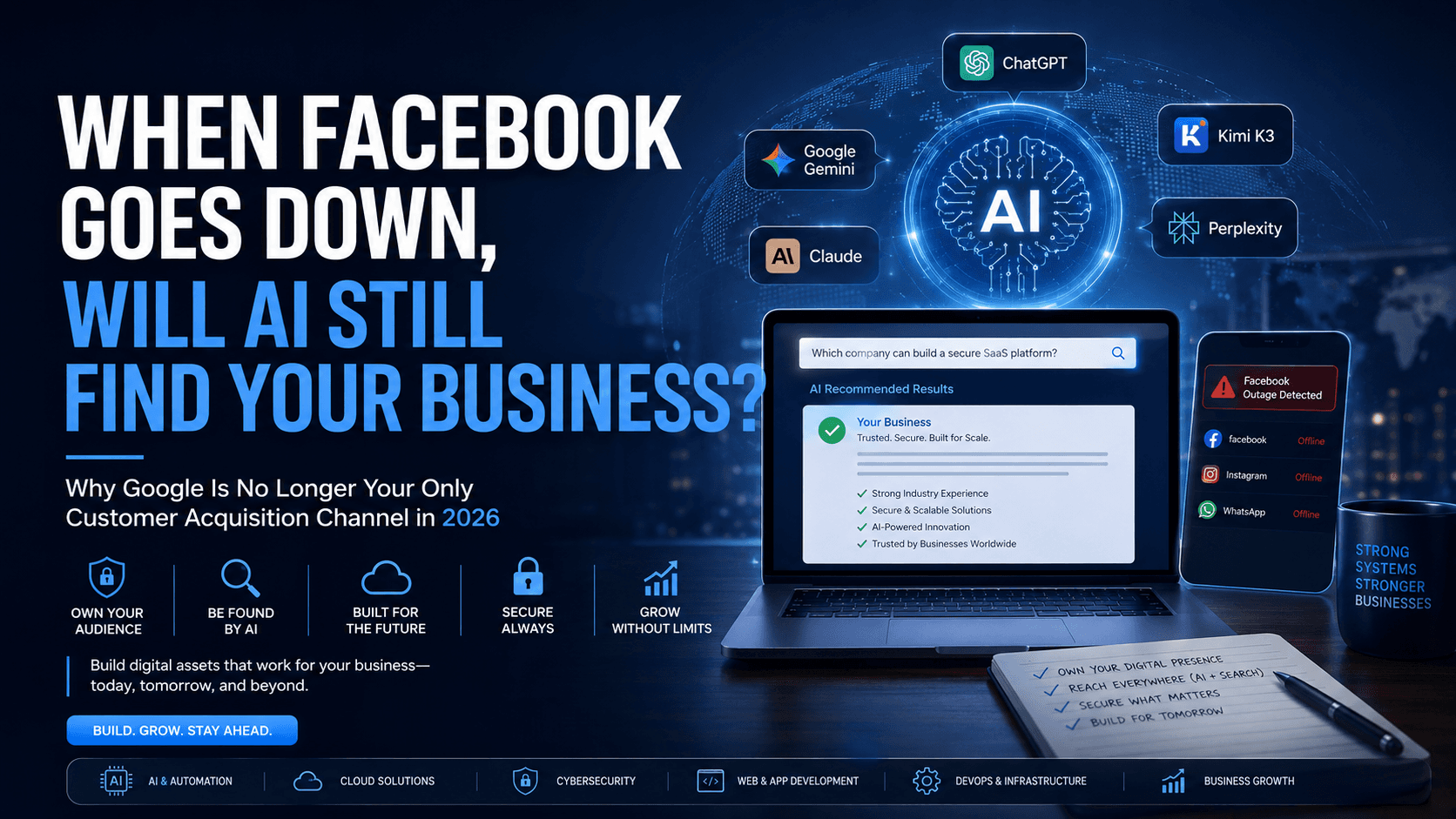
When Facebook Goes Down, Will AI Still Find Your Business?
Social media outages are a reminder that businesses don't own their audience. Learn why AI search, modern websites, cloud infrastructure, and cybersecurity are becoming the new foundation for customer acquisition in 2026.