
Zero-Client Keys: Why Your Apps Shouldn't Hold API Secrets at All
Most API key leaks don't start with a sophisticated attack. They start with a key that should never have left the server in the first place.
Mobile apps ship with keys baked into the binary. Frontend code calls third-party APIs directly, secret in hand. Internal tools hardcode credentials "just for now." Every one of these is a key sitting somewhere it can be extracted, decompiled, or scraped — and once it's out, it's out for good until someone notices and rotates it.
The pattern that keeps repeating
A team needs to call a payment provider, an AI model, or an analytics API from a client app. The fastest path is to drop the key straight into the client. It works in the demo. It ships. Eighteen months later nobody remembers it's there, the key has full account permissions, and it's sitting in a public app bundle.
This isn't a junior-developer problem — it happens in mature codebases because the fast path and the safe path are different amounts of work, and deadlines reward fast.
Move the secret behind a gateway
The fix isn't "be more careful with keys." It's removing the opportunity for the mistake entirely. If a client app never holds a real credential, it can't leak one.
A gateway layer sits between your apps and the third-party APIs they depend on. The client authenticates to your gateway with a scoped, revocable token. The gateway holds the actual provider keys, server-side, and forwards the request. The client never sees — and never can see — the underlying secret.
That single architectural shift closes off an entire category of incident:
- Zero-client keys — nothing sensitive ships in a binary, bundle, or config file a user can inspect.
- Revocation without redeployment — compromise a client token and you kill it from the gateway; you don't have to ship an app update to rotate a leaked key.
- Per-surface scoping — your iOS app, web app, and internal admin tool can get different permission levels off the same underlying provider key.
- One place to monitor — usage, anomalies, and spend all flow through a single chokepoint instead of being scattered across however many apps call the API directly.
What this costs you
Nothing comes free. A gateway adds a network hop, and it adds infrastructure you now own and have to keep available. For most products, that latency is negligible next to the blast radius of a leaked provider key — but it's worth measuring rather than assuming.
The real cost is organizational: someone has to own the gateway, define the scoping rules, and keep the policy current as new integrations get added. That's the part teams underestimate. The technology is the easy half.
This is what we built Enforyn around
We kept seeing the same root cause across client engagements — not weak encryption, not clever exploits, just keys that should never have been client-side in the first place. Enforyn is our answer to it: a gateway layer built specifically so client apps never hold real provider credentials, with real-time usage policy and cost control on top.
If your apps are currently calling third-party APIs directly with embedded keys, that's the first thing worth fixing — independent of whatever tool you use to fix it.
Keep reading

The EU AI Act's August 2 Deadline Is Here: Is Your AI Software Actually Compliant?
The EU AI Act is reshaping how businesses build and deploy AI. Learn who it affects, the biggest compliance gaps, and the engineering steps every company should take before regulations tighten.
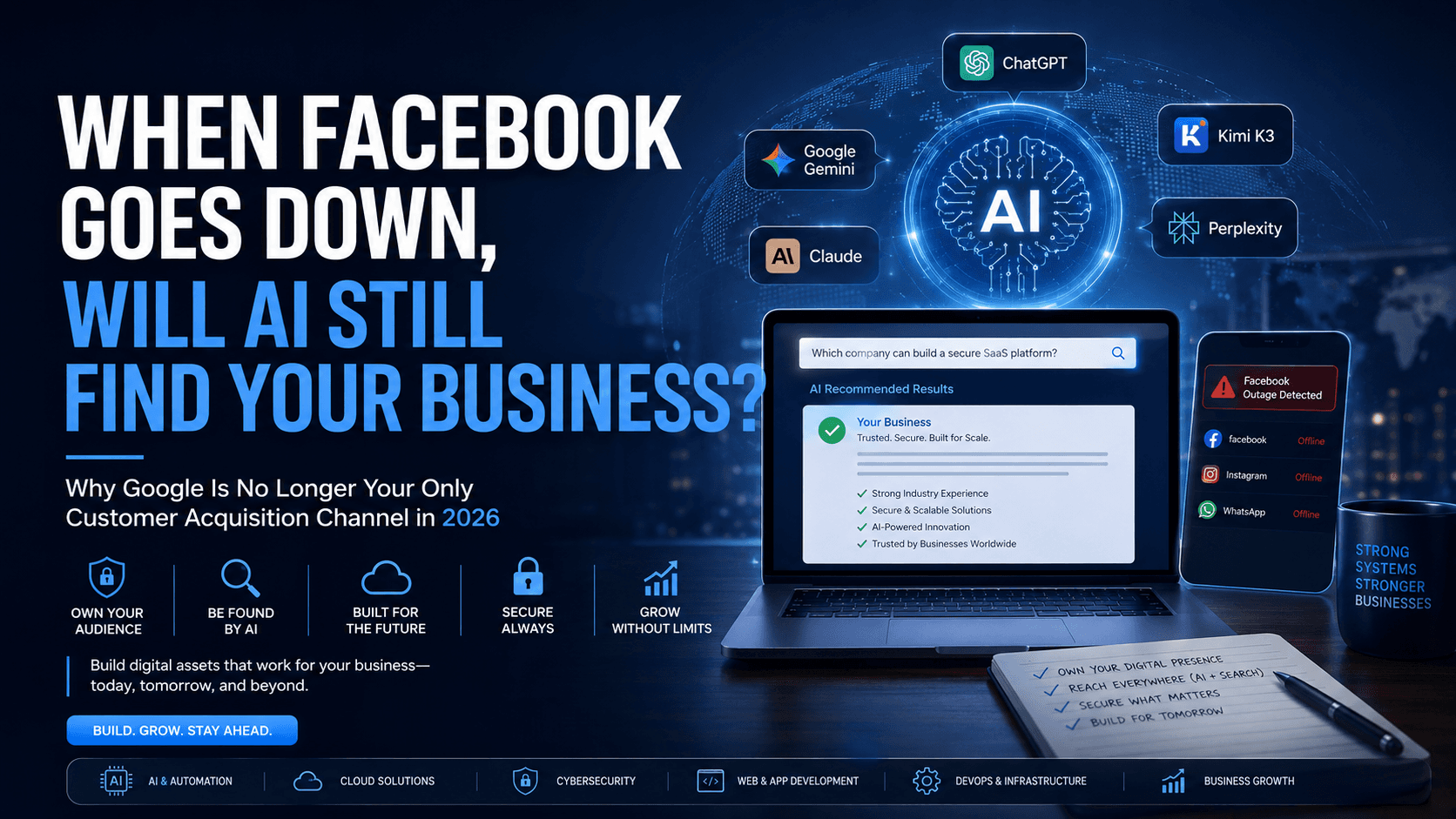
When Facebook Goes Down, Will AI Still Find Your Business?
Social media outages are a reminder that businesses don't own their audience. Learn why AI search, modern websites, cloud infrastructure, and cybersecurity are becoming the new foundation for customer acquisition in 2026.